
Sweet vs. Sour Cherries: The Ultimate Guide to Taste, Nutrition, and Culinary Uses
Walking into a farmers market during peak summer creates a sensory overload of vibrant colors and sweet aromas. Among the most coveted stone fruits are cherries, yet many consumers struggle to distinguish the nuances between the two primary categories. Understanding the difference between sweet and sour cherries elevates your culinary creations and maximizes the health benefits you receive from these ruby gems. This guide explores the distinct profiles of sweet vs sour cherries, ensuring you select the perfect fruit for every occasion.

The Botanical and Flavor Profiles: A Stark Contrast
Fundamentally, these two fruits belong to different species. Sweet cherries (Prunus avium) and sour cherries (Prunus cerasus) diverge significantly in chemical composition and texture. Recognizing these traits prevents culinary disasters, such as a bland pie or an inedibly tart fruit salad.
Sweet Cherries: The Snacking Star
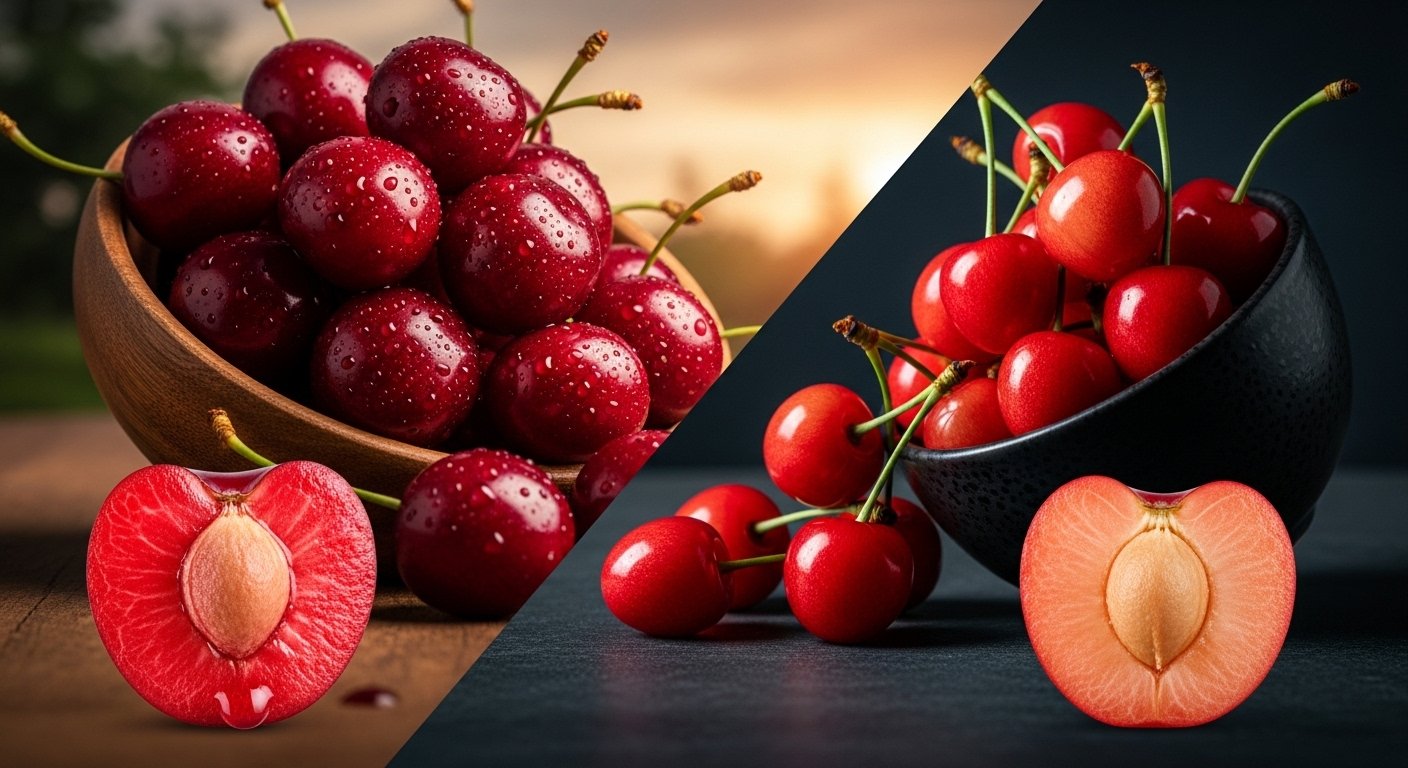
Primarily, consumers encounter sweet cherries like Bing, Rainier, and Chelan in standard grocery stores. These varieties contain higher natural sugar levels, providing a firm, crunchy texture that bursts with juice upon the first bite. Consequently, they serve best as raw snacks or fresh additions to fruit salads where their natural sweetness shines without added sugars. Furthermore, integrating these nutrient-dense fruits supports a healthy lifestyle, much like the strategies outlined in our guide on the best berries for weight loss after 50.
Sour Cherries: The Baker’s Secret Weapon
Conversely, sour cherries, often labeled as "tart" or "pie" cherries, possess a lower sugar content and a higher concentration of malic acid. This acidity creates a complex flavor profile that stands up well against heat and sugar during cooking. Moreover, their softer texture allows them to break down slightly while maintaining integrity in fillings. The most famous variety, the Montmorency, dominates the processed cherry market, appearing in dried forms, juices, and frozen packs. Similar to the convenience offered by Elgin Organic frozen berries, utilizing frozen tart cherries ensures you have premium fruit available year-round for your baking needs.
Nutritional Showdown: Sweet Cherry Nutrition vs Tart
While both varieties offer substantial health advantages, the nutritional benefits of sour cherries often steal the spotlight in medical research. Comparing sweet cherry nutrition vs tart reveals specific advantages depending on your health goals. For instance, blending these fruits creates delicious beverages, a concept explored in our article on the tasty way to lose weight with berry smoothie combinations.
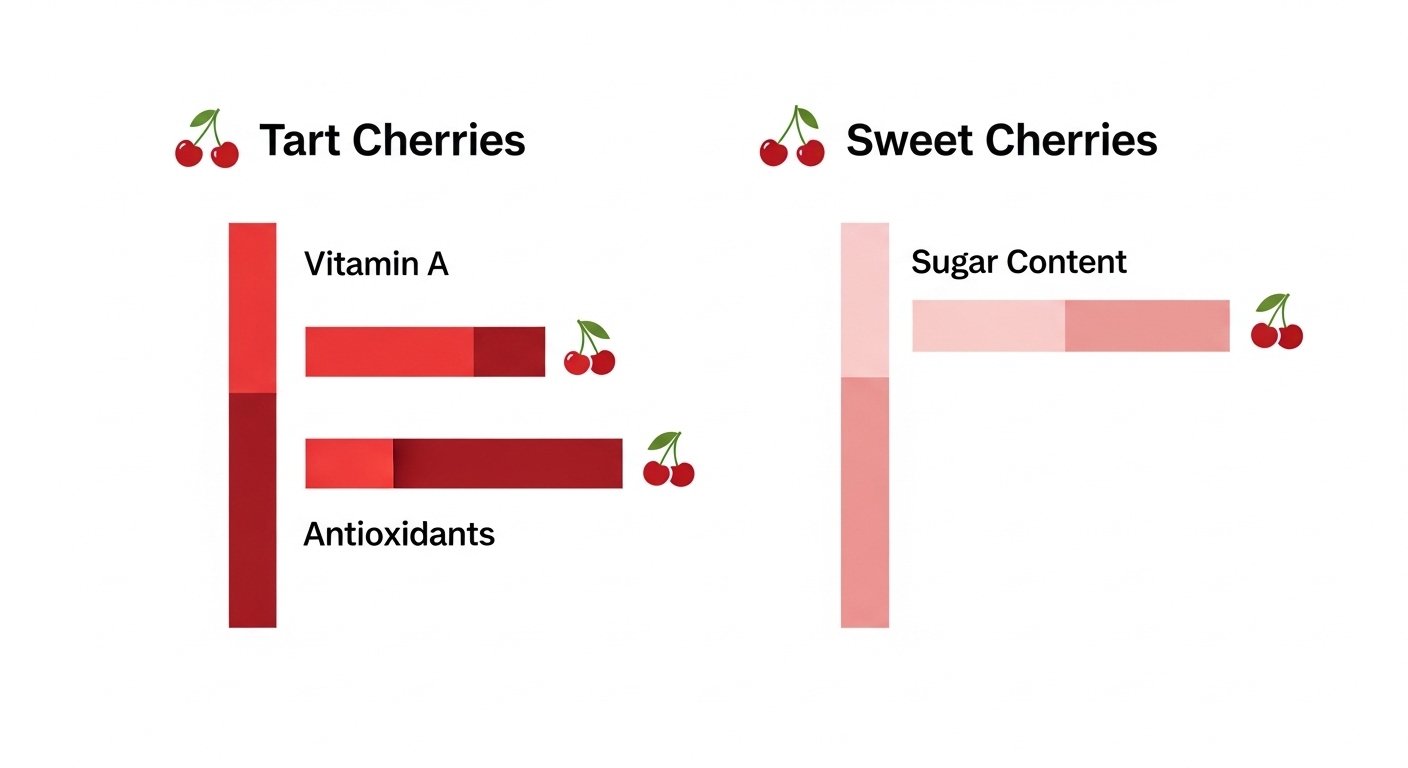
- Antioxidant Powerhouse: Tart cherries contain significantly higher levels of anthocyanins, the pigments responsible for their bright red color and anti-inflammatory properties.
- Vitamin Content: Remarkably, sour cherries provide nearly 20 times more Vitamin A than their sweet counterparts.
- Sugar Levels: Naturally, sweet cherries contain more calories and carbohydrates per serving due to their fructose content.
- Sleep Aids: Both types contain melatonin, but tart cherries offer a more concentrated dose, helping to regulate sleep cycles effectively.
Furthermore, athletes frequently consume tart cherry juice to reduce muscle soreness after intense workouts. Science confirms that the anti-inflammatory compounds in tart cherries accelerate recovery times more efficiently than sweet varieties. According to authoritative research, the benefits of tart cherry juice extend significantly to inflammation reduction and improved sleep quality.
Culinary Applications: How to Cook with Tart Cherries vs. Sweet
Selecting the best cherries for baking requires an understanding of how heat affects flavor. Using the wrong variety alters the chemical balance of your recipe.
Mastering the Art of Baking
Undoubtedly, tart cherries reign supreme in the bakery. Their high acidity balances the heavy amounts of sugar required in jams, jellies, and pies. When you bake with sweet cherries, the final product often tastes one-dimensional and overly sugary. Therefore, if a recipe calls for cherries without specifying the type, assume it requires tart cherries or adjust your acid levels accordingly (perhaps by adding lemon juice) if you must use sweet ones.
Savory Dishes and Sauces
Interestingly, culinary uses for sour cherries extend beyond dessert. Their acidity mimics citrus or vinegar, making them excellent candidates for savory applications. Consider these innovative uses:
- Game Meat Glazes: Create a reduction sauce for duck, venison, or pork chops using tart cherries to cut through the rich fat.
- Salad Dressings: Whisk tart cherry concentrate into vinaigrettes for a fruity yet sharp dressing.
- Persian Cuisine: Many Middle Eastern rice dishes specifically utilize dried sour cherries to add complexity to saffron rice.
In contrast, sweet cherries pair well with fresh cheeses like burrata or Meredith Goat Cheese Original in appetizers where no cooking occurs.
Shopping and Storage Best Practices
To maximize shelf life, you must handle these delicate fruits with care. Generally, sweet cherries appear in the produce section from May to August. You should look for firm, shiny skin and green stems. Brown stems indicate the fruit is past its prime.
However, fresh sour cherries are incredibly ephemeral. They bruise easily and spoil quickly, often disappearing from markets within two weeks. Consequently, most people buy them frozen, dried, or canned. If you find fresh tart cherries, buy them immediately and process them within 24 hours.
Conclusion
Ultimately, the battle of sweet vs sour cherries ends in a draw, as each serves a distinct and vital purpose in the kitchen. Sweet cherries offer immediate gratification as a healthy, delicious snack, while sour cherries provide the complexity and nutritional density required for baking and wellness. By understanding the difference between sweet and sour cherries, you empower yourself to make better choices for your diet and your dining table. Next time you plan a menu, remember: choose sweet for fresh enjoyment and sour for culinary excellence.